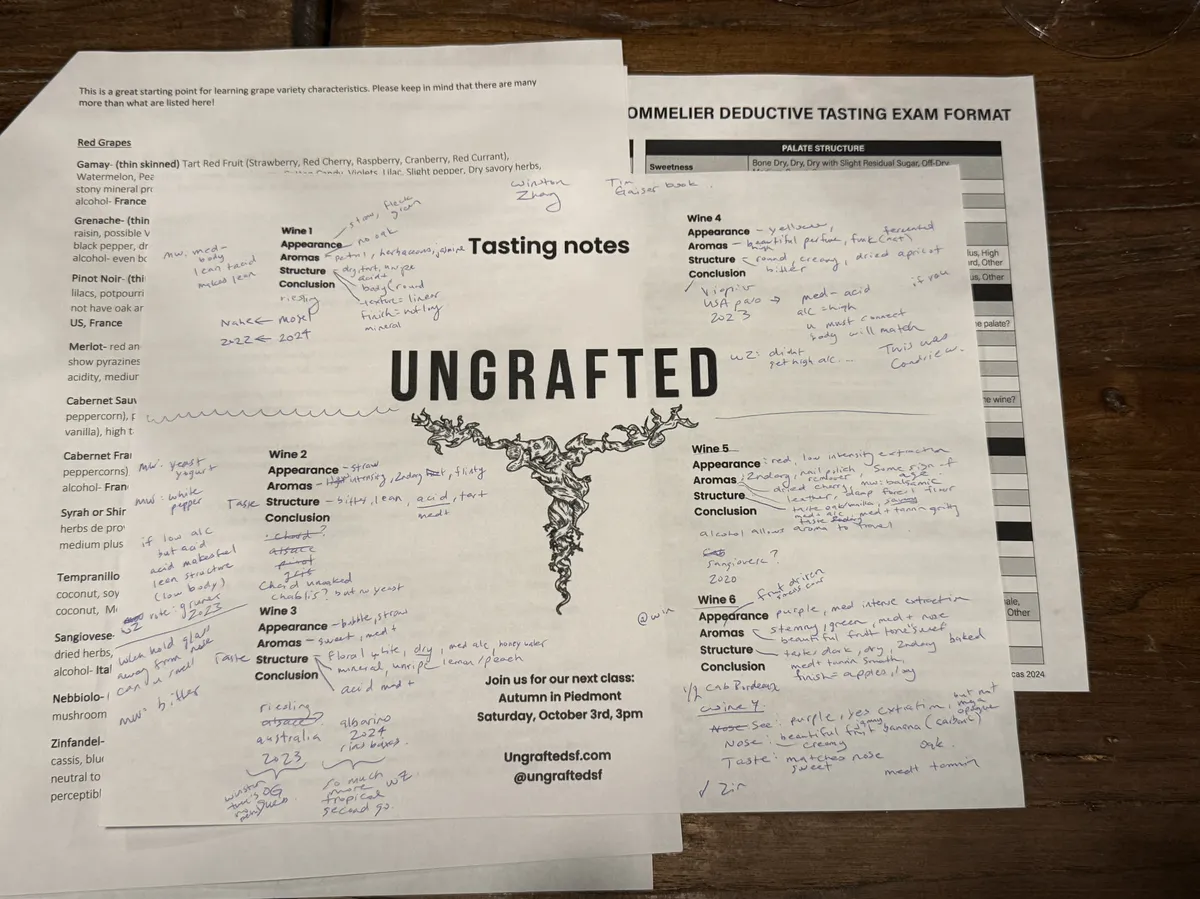
body call is causal with alcohol and acid call. high alcohol big body. high acid makes wines seem leaner and lighter bodied
hold glass a bit away from nose and see if you can still smell it, if you can it’s high aroma
green != stemmy, i said something was stemmy in place for vegetal like green pepper (turns out the wine was destemmed)
to taste oak take a quick swig through the throat and see if you perceive spices or vanilla
to taste alcohol stand up straight and feel the fumes going up/down while exhaling with an O
to taste acidity open mouth and lift tongue up but don’t touch tongue to roof of mouth. is your mouth gushing with saliva?
summarize final deductive notes by thinking through what key notes are driving this wine (eg top 5 descriptors) so you don’t get lost in the sea of descriptors
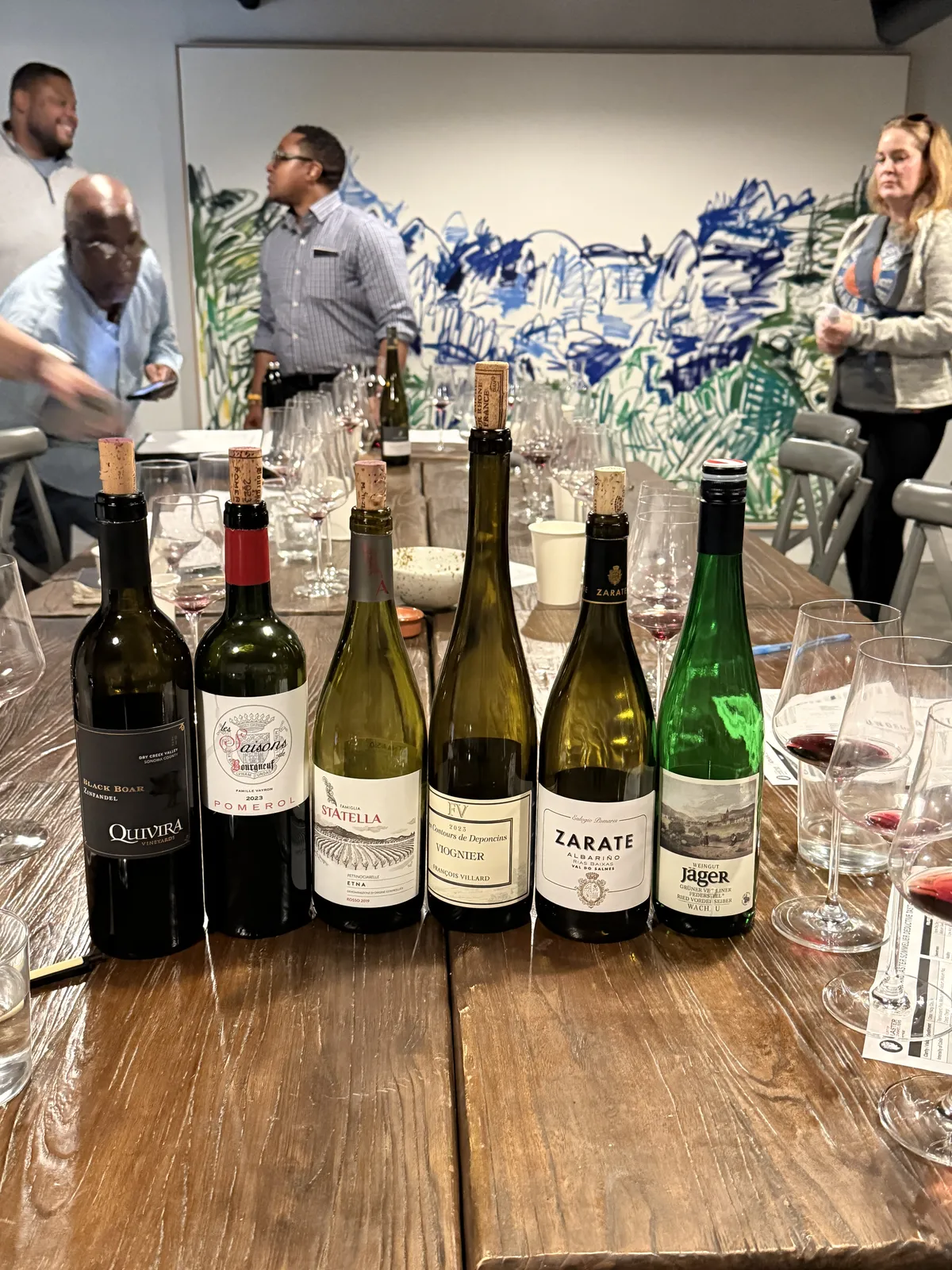
wines pictured map left to right starting with wine 7 (zin) going rightwards to wine 2 (gruner). wine 1 was an intro riesling freebie
My specific guesses and learnings
I was confused, low aroma wine I guessed unoaked chard but wasn’t confident cause it didn’t seem Californian but also didn’t seem like Chablis (no lees presence or that Chablis minerality). It was gruner - some people called white pepper but I couldn’t detect it at all. At the end I suppose the juice did seem a bit adjacent to white radish / daikon
I was confused, called riesling because it seemed high acid and smelled very white flower and honey water, smelled sweet so I went riesling even though I got zero petrol. I think this is the second time I guessed riesling without smelling petrol only to get it wrong so there you go. It was albarino. After the wine warmed a bit the tropical fruits became much more pronounced but even at first sniff, the peaches should have been a clue
I called viognier but I wasn’t confident (because I don’t drink much viognier so this was almost all deductive, and I wasn’t getting the “oiliness” of viognier maybe cause the og natty fermented funk was throwing me off). I guessed usa paso robles cuz high alcohol but it was Condrieu
guessed sangiovese. thin skinned red that was savory/secondary first. going into the italy territory, there was good tannin but not enough perfume or roses to be nebbiolo. defaulted sangio but it was a trick etna rosso
I guessed cab sauv bordeaux because it seemed so green high tannin and secondary first (not napa). was pomerol
i guessed zin usa. it was jammy fruit forward. i got a lot of banana but it was obviously not gamay. beautiful nose just so much sweet fruit flavor tho was obv dry wine. someone said why not rioja tempranillo and i can’t remember what MS said. also why not syrah?
Quivira, Dry Creek Valley "Black Boar" Zinfandel 2021 - $65 MSRP
Vitification: 85% Zinfandel, 15% Petite Sirah from estate Wine Creek Ranch (59 acres of vines, CCOF-certified organic), a cooler Dry Creek site with well-drained soils; dry 2021 gave low yields.
Vinification: Hand-sorted in stages, destemmed whole-berry (no crushing), 3-7 day cold soak, 7-10 day ferment in open-top barrels and steel, basket-pressed, finished in barrel; 18 months in French oak, 25% new; 14.9% alcohol, 5.8 g/L acidity, pH 3.61 (method per the 2018 sheet).
Château Bourgneuf, Pomerol AOC "Les Saisons de Bourgneuf" 2023 - ~$58 (Wine-Searcher avg)
Vitification: 95% Merlot, 5% Cabernet Franc from a single parcel planted in 2010 on the 9 ha estate next to Trotanoy; clay at the top of the slope, then clay-sand, then gravel.
Vinification: Hand-harvested, sorted, destemmed and crushed; fermented in temperature-controlled cement vats, extraction by pump-overs only, malo in vat; 12-14 months in French oak (estate-level method).
Vitification: 90% Nerello Mascalese, 10% Nerello Cappuccio; organic, about 15-year-old vines at 765-770 m in Solicchiata, on poor, sandy, fast-draining volcanic soils.
Vinification: Fermented with selected yeasts in temperature-controlled steel, 10-15 day maceration (12 days in 2019), then 10 months in used 500 L French casks, none new. Destemming not published.
François Villard, IGP Collines Rhodaniennes "Les Contours de Deponcins" Viognier 2023 - ~$34 (Wine-Searcher avg)
Vitification: 100% Viognier, 15-year-old organic vines in Saint-Michel-sur-Rhône and Vérin, sandy granite and mica facing southeast; single Guyot pruning, 8,000 vines/ha, 45 hL/ha.
Vinification: Pressed directly into 3-5 year old barrels, native-yeast fermentation at low temperature, lees stirred weekly for 6 months, 11 months on lees without racking.
Zarate, Rías Baixas DO Val do Salnés Albariño (vintage not visible) - ~$28 (Wine-Searcher avg)
Vitification: 100% Albariño from 11 parcels (6.54 ha) in Sisán and Padrenda, weathered granite, 35-year-old vines on pergolas at 50 m, 1,200 vines/ha; untilled with no herbicides since 1994.
Vinification: Hand-harvested and sorted, destemmed, gently pressed for low yield, lightly settled, wild-yeast fermentation in steel, 3 months on fine lees; about 30% malo in 2023.
Vitification: 100% Grüner Veltliner from Jäger's newest vineyard, facing southwest, Gföhl gneiss under 2 m of loess; hand-picked in early October.
Vinification: Crushed and pressed, fermented with cultured yeast, filtered after about 3 months, bottled in February under screwcap; current vintage 12.5% alcohol, 5.9 g/L acidity, 1 g/L sugar.